
Swiss company. German supplier. Euro invoice.
Most founders pay it the same way they pay everything else: log in, "international transfer", send, hope.
Then the statement shows a conversion they didn't plan, a fee they didn't expect, or a supplier email saying "we received less than invoiced".
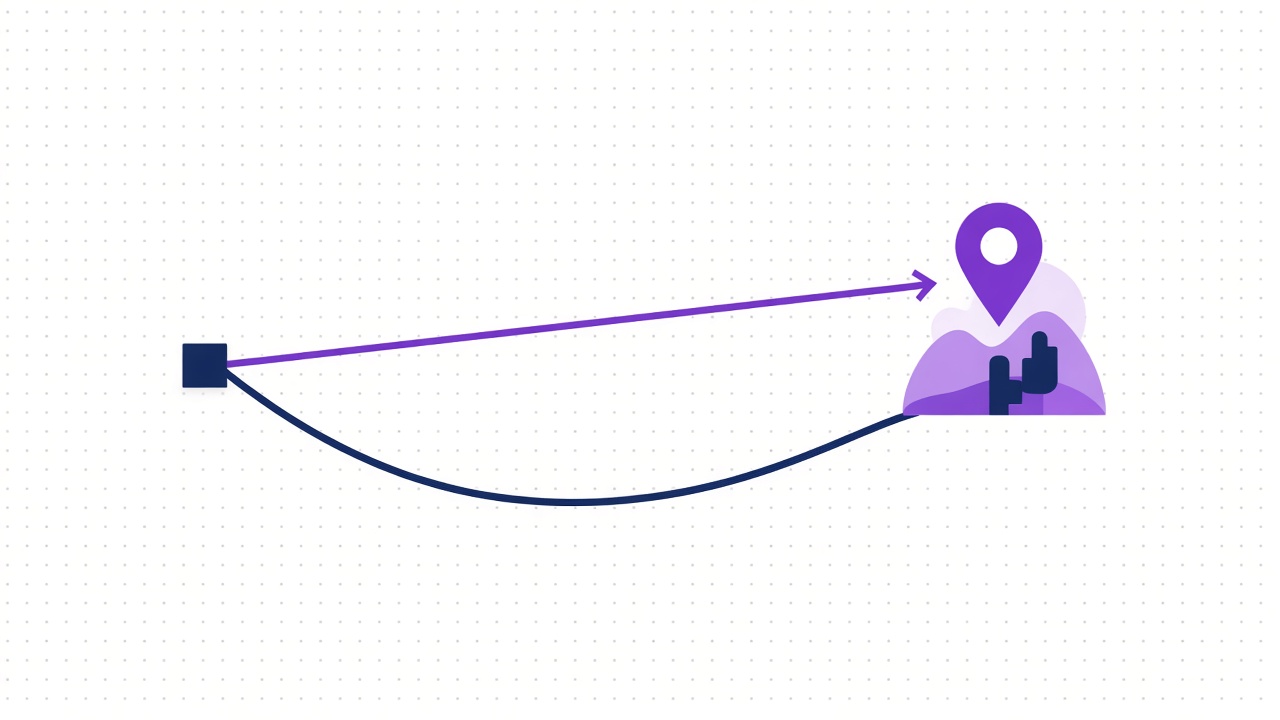
None of this is complicated once you see the two roads a euro payment can take.
The 30-second version
- Paying euros to a supplier in the SEPA area? Use a SEPA credit transfer where your provider offers it.
- Paying any other currency, or a country outside SEPA? That's usually SWIFT.
- Paying from a currency you don't hold? There's a conversion somewhere. Find out who does it and at what rate.
The rest of this article is the detail behind those three lines.
Yes, a Swiss company can use SEPA
Switzerland isn't in the EU or the EEA. It is inside the geographical scope of the SEPA schemes, and has been since 2006, according to the European Payments Council (EPC).
That means euro payments between a Swiss provider and an EU provider can run on SEPA, if both providers take part in the scheme.
What SEPA covers:
- Currency: euro only. SEPA is a euro scheme. A CHF or USD payment is never "SEPA".
- Geography: the EU/EEA plus several non-EEA countries, including Switzerland, the UK, Monaco and San Marino.
- Format: standardised. IBAN-based, with structured data.
- Speed: a standard SEPA credit transfer arrives the same day or the next business day.
SEPA Instant
There's also an instant version (SCT Inst), where funds can arrive within seconds. It only works if both your provider and the supplier's provider offer it, so check with your provider before you promise anyone a same-minute payment.
What SWIFT is (and why it costs more)
SWIFT isn't a payment system. It's a messaging network that banks use to instruct each other. An international payment over SWIFT can pass through one or more correspondent banks before it reaches the supplier's bank.
That's why SWIFT payments can:
- take longer (often a day or more, depending on the route),
- have fees taken along the way by intermediaries,
- arrive as a slightly smaller amount than you sent.
SWIFT is the right tool for many jobs: USD to the US (unless you use ACH or Fedwire), GBP to some recipients, payments to countries outside SEPA, and currencies like MXN or BRL. It just isn't the best default for a plain euro invoice to Germany.
The charge codes: OUR, SHA, BEN
On a SWIFT payment you usually choose who pays the fees:
- OUR — Who pays: You pay all fees; What the supplier receives: The full invoice amount (usually)
- SHA — Who pays: Shared: you pay yours, they pay theirs; What the supplier receives: Possibly less than invoiced
- BEN — Who pays: The beneficiary pays all fees; What the supplier receives: Less than invoiced
If a supplier keeps telling you "short payment", look at the charge code before you blame anyone.
SEPA vs SWIFT at a glance
- Currency — SEPA credit transfer: EUR only; SWIFT transfer: Almost any
- Reach — SEPA credit transfer: SEPA countries; SWIFT transfer: Worldwide
- Typical speed — SEPA credit transfer: Same day or next business day; SWIFT transfer: Depends on the route
- Intermediary fees — SEPA credit transfer: Not usual; SWIFT transfer: Possible
- Best for — SEPA credit transfer: EUR invoices to the EU, UK and similar; SWIFT transfer: Non-EUR payments, non-SEPA countries
The data your supplier needs to give you
Most failed or delayed euro payments are a data problem, not a rail problem. Before the first payment, get these in writing:
- Legal name of the beneficiary, exactly as on their account.
- IBAN.
- BIC. Include it to be safe. It's often optional within the EEA, but payments involving non-EEA SEPA countries like Switzerland may need it.
- Address: town and country at minimum. Address data is increasingly required on cross-border payments, so a complete, structured address avoids rejections.
- The invoice number to use as the payment reference.
Fraud warning: if a supplier emails "new bank details", call them on a number you already have before you pay. Changed-bank-details emails are one of the most common invoice fraud patterns.
The expensive mistake: converting on every invoice
Here's a pattern we see a lot, with hypothetical numbers:
A Swiss GmbH sells to German customers and buys from an Austrian supplier. Customers pay EUR 20,000 a month into the company's CHF account, so that's converted to francs. The supplier invoices EUR 8,000 a month, paid from the CHF account, so that's converted back to euros.
That's two conversions on money that started and ended in euros. Each one has a fee and a spread. Over a year, you've paid to swap the same euros back and forth 24 times.
The fix is simple:
- Hold a EUR account. Let EU customers pay euros into it.
- Pay EU suppliers from that EUR balance via SEPA.
- Convert only the surplus to CHF, on purpose, when you choose.
For how to measure what each conversion really costs you, read The FX Fee Your Bank Never Shows You.
A simple decision checklist
Before you hit send on any foreign payment, ask:
- What currency is the invoice in? Pay in that currency.
- Do I hold that currency? If not, should I?
- Is the supplier in SEPA, and is it EUR? Then use SEPA.
- If it's SWIFT, who pays the fees? Pick OUR, SHA or BEN deliberately.
- Do I have a verified IBAN, name and address? If the details are new, confirm them by phone.
- Do I see the fee before sending? If not, ask your provider why.
Swiss payments are a different road again
Paying a Swiss supplier in CHF isn't SEPA or SWIFT. It's a domestic payment (SIC), and very often it's a QR-bill. That's its own topic. Read The QR-Bill, Explained for Busy Founders.
If invoices pile up in your inbox before anyone pays them, the bigger win may be your approval flow, not the rail. See Forward a Bill, Click Approve: Accounts Payable on Autopilot.
Bottom line
Pick the road before you pick the button.
Euros to the EU? SEPA. Everything else? Check the route, the currency and the fees, then send.
FAQ
Can a Swiss company send SEPA payments?
Yes. Switzerland has been in the geographical scope of the SEPA schemes since 2006, so euro payments between participating Swiss and EU providers can run on SEPA.
Is SEPA cheaper than SWIFT?
Often, for euro payments, because there are usually no intermediary banks. But your provider's fee schedule decides what you pay, so compare the fee shown before you send.
Can I send CHF via SEPA?
No. SEPA only handles euros. CHF payments within Switzerland run on SIC, and CHF payments abroad typically go via SWIFT.
Why did my supplier receive less than I sent?
Usually intermediary fees on a SWIFT payment under SHA or BEN charges, or a conversion you didn't expect. Check the charge code and currency.
Do I need a EUR account to pay EU suppliers?
Not strictly, but if you both earn and spend euros, a EUR account avoids converting back and forth on every invoice.
Pay EU suppliers from one balance
With Firma, your company gets a EUR account alongside CHF, USD, GBP, CAD, MXN and BRL. You can pay via SEPA, SWIFT, Swiss QR, SIC, ACH, Fedwire, FedNow or stablecoins from the same place, and the fee is shown before you send. Money in is free. Plus is Fr. 499 a month with 25 bps on outgoing payments.
New here? Start with How to Open a Swiss Business Account in Days, Not Weeks. If clients want to pay you in stablecoins, see How a Swiss Company Can Receive USDC (and What to Do Next). And for the bigger picture, read 7 Money Mistakes Swiss Founders Make in Year One.
Firma is a regulated financial technology company, not a bank. Banking services are provided through banking partners. Balances are digital stablecoin tokens, not bank deposits, and are not covered by esisuisse.
Sources: European Payments Council, SEPA timeline and EPC List of Countries in the SEPA Schemes; Firma pricing and FAQ.